

02 Sep Industrial Refrigeration Solutions – Aman Refrigeration
Industrial Refrigeration: Reliable Cooling Solutions for Modern Businesses
Temperature control is an important need in many industries. Businesses depend on reliable cooling systems to keep their products safe and their operations running smoothly, from food processing and cold storage to pharmaceuticals, dairy production, chemical plants and manufacturing facilities. Industrial Refrigeration provides the heavy-duty, continuous cooling required for these demanding commercial and industrial applications.
Aman Refrigeration creates dependable refrigeration environments for businesses based on their operations. A refrigeration system that is working properly helps a business keep products at high quality levels, reduce wasted energy, improve the reliability of the process and control temperatures during production and storage.
The selection of appropriate refrigeration system varies on the cooling capacity, operating conditions, energy requirements, space limitations, maintenance needs and possibility of future expansion. A system built professionally will make sure the business works consistently and won’t have any unwanted operational issues.
What Is Industrial Refrigeration?
Industrial refrigeration is a large scale cooling system used in industrial processes, storage areas, production facilities and temperature controlled environments to remove heat. The industrial ones are not your average domestic fridge or small commercial cooling systems
These systems may be used to hold cold or frozen temperatures in warehouses, cold rooms, processing plants, production areas and specialized facilities.
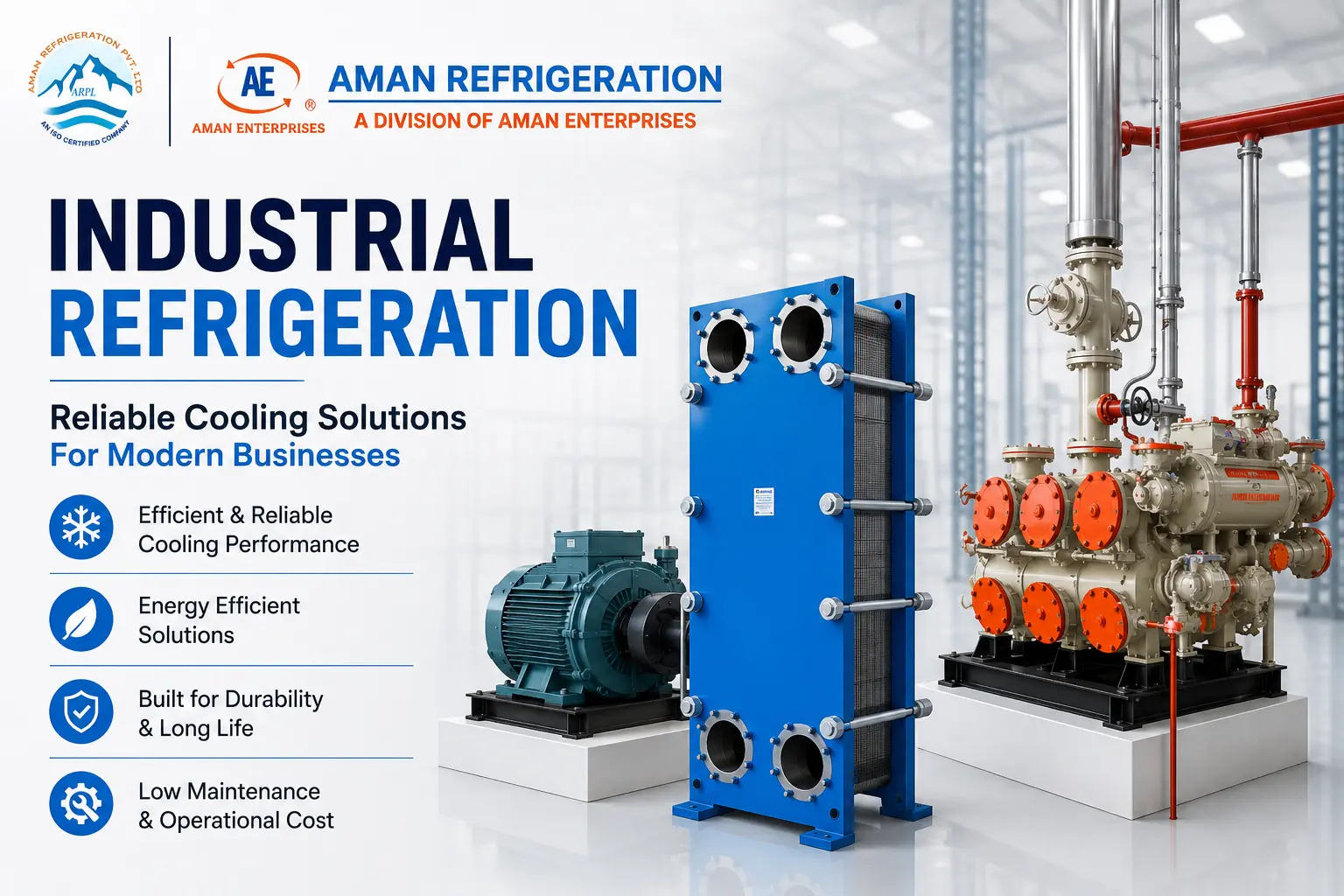
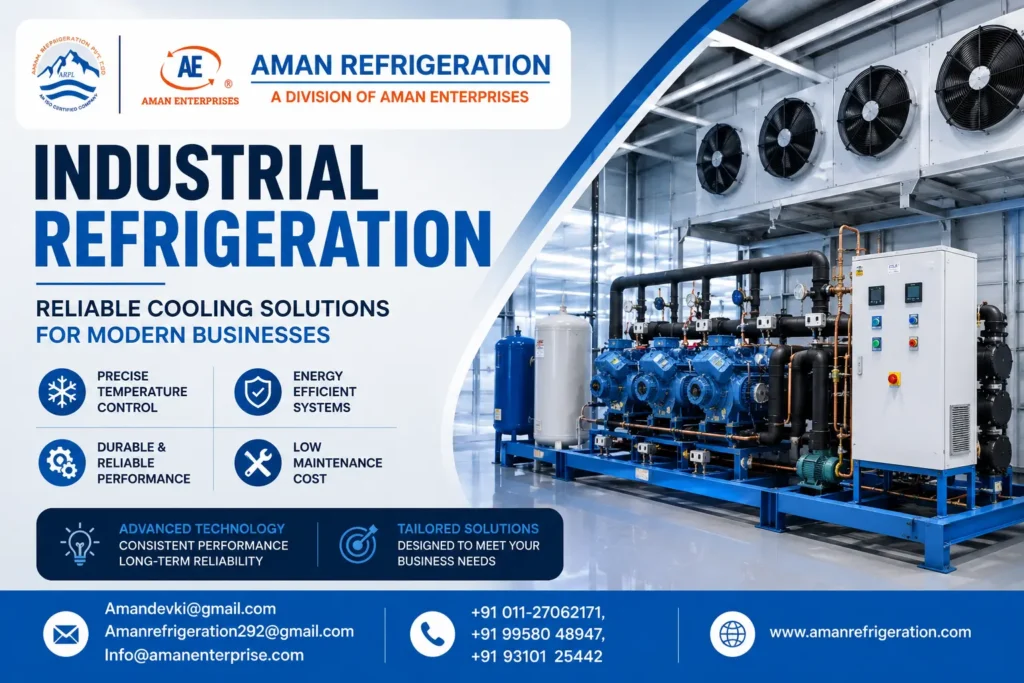
Refrigeration systems include compressors, condensers, evaporators, piping, controls, refrigeration units, insulation, and temperature-monitoring equipment. All parts must work efficiently together for stable cooling conditions.
System configuration depends on application. For instance, a frozen food storage facility might need a different temperature range and cooling capacity than a pharmaceutical warehouse or food processing plant.
Why Industrial Cooling Is Important for Businesses
Reliable cooling isn’t only about keeping a room cold. For many businesses, temperature management directly affects product safety, production efficiency, storage life, equipment performance, and operating costs.
A properly designed Industrial Refrigeration system will maintain temperatures consistently despite changes in outside conditions, production loads or storage volumes.
Temperature changes can lead to a variety of problems. Food may spoil, frozen items may be broken, manufacturing processes can be inconsistent, and delicate materials can deteriorate.
A good cooling system will help reduce these risks as it will provide stable operating conditions in the required area.
If your business operates 24/7, then refrigeration reliability becomes more important. Equipment downtime can cause production interruption, inventory effect, cost increase and productivity loss.
Applications of Industrial Refrigeration
Modern refrigeration technology is used across many sectors because different industries require precise temperature management.
1. Food Processing
Food manufacturers rely on Industrial Refrigerationfor chilling, freezing, preparation, processing, and storage. Controlled temperatures help preserve product quality and support safe handling practices.
Meat, seafood, fruits, vegetables, beverages, bakery products, and packaged foods may all require refrigeration during different stages of production.
2. Cold Storage Facilities
Cold warehouses require dependable systems capable of maintaining large areas at specific temperatures. These facilities may store frozen foods, dairy products, agricultural products, beverages, medicines, or other temperature-sensitive goods.
A properly selected system helps ensure uniform cooling throughout the storage space.
3. Dairy Industry
Milk and dairy products require careful temperature control from processing through storage. Refrigeration systems can support cooling requirements for milk, butter, cheese, yogurt, ice cream, and other dairy products.
4. Pharmaceutical Industry
Many medicines, laboratory materials, and pharmaceutical products require controlled storage conditions. Reliable cooling equipment can help maintain the required temperature range and reduce the risk of product deterioration.
5. Beverage Industry
Beverage production often involves cooling during processing, storage, and packaging. Industrial Refrigeration systems can support consistent temperatures for soft drinks, juices, bottled beverages, and other products.
6. Manufacturing and Process Industries
Some manufacturing processes generate significant heat and require cooling to maintain stable production conditions. Refrigeration can be used for process cooling, machine cooling, material temperature control, or environmental management.
Key Components of an Industrial Refrigeration System
A successful refrigeration system depends on several important components working together:
⦁ Compressor: Often considered the heart of the refrigeration system, it circulates refrigerant and maintains the pressure conditions necessary for cooling.
⦁ Condenser: Removes heat absorbed during the refrigeration cycle. Different condenser configurations can be selected based on operating requirements and environmental conditions.
⦁ Evaporator: Absorbs heat from the area or process being cooled. Proper selection helps maintain efficient heat transfer and stable temperatures.
⦁ Control Systems: Allow operators to monitor temperature, pressure, equipment status, and overall system performance.
⦁ Piping & Insulation: Support efficient and reliable refrigeration operation while helping maintain the required cooling conditions.
⦁ Valves, Electrical Controls & Safety Devices: Contribute to the safe, controlled, and dependable operation of the system.
A well-designed Industrial Refrigeration installation considers how all these components work together rather than selecting each part independently.
Benefits of an Efficient Industrial Refrigeration System
Investing in a cost-effective cooling solution can deliver a number of long-term business benefits.
One of the biggest benefits is the ability to maintain a consistent temperature. Properly designed systems keep products and processes at the desired temperature range.
Another big one is energy efficiency. Refrigeration equipment can run for many hours during the day so poor performance can have a significant impact on electricity consumption.
A properly sized **Industrial Refrigeration** system can help to reduce unnecessary energy use by more closely matching the cooling capacity to the actual operational demand.
Also, reliable systems can help to reduce unplanned downtime. Professional installation , quality components and regular maintenance can increase dependability of equipment .
Another advantage is enhanced product protection. Stable cooling conditions are beneficial for many temperature-sensitive products to retain freshness, quality, appearance, texture, and storage life.
Energy Efficiency in Industrial Cooling
Energy cost is an important issue for companies with large refrigeration systems. Overall efficiency depends on a number of factors including equipment selection, system sizing, quality of insulation, operating temperature, maintenance condition and control strategy.
An oversized system could short cycle unnecessarily.
An undersized system might not be able to maintain the necessary temperature . Hence the correct system design is essential.
Regular maintenance can also increase the efficiency of Industrial Refrigeration equipment. Dirty heat transfer surfaces, refrigerant problems, damaged insulation, worn components or incorrect operating settings can increase energy consumption.
Businesses should also, wherever possible, track operating data. Temperature trends, hours of operation, equipment loads and unusual performance changes can all be used to identify potential efficiency issues before they become major problems.
Importance of Professional Installation
Even high-quality refrigeration equipment can perform poorly when it is installed incorrectly.
Professional installation helps ensure that components are positioned correctly, refrigerant piping is appropriately configured, electrical connections are secure, insulation is properly installed, and controls are adjusted according to operational requirements.
Before installing Industrial Refrigeration, several factors should be evaluated, including room size, required temperature, product load, door-opening frequency, ambient conditions, insulation, operating schedule, and future business requirements.
Careful planning at the beginning can reduce costly modifications later.
For businesses expecting future expansion, refrigeration systems should also be planned with scalability in mind whenever practical.
Maintenance for Long-Term Performance
Routine maintenance is an important part of prolonging the life of your equipment and reliable cooling.
Look for odd sounds , temperature differences , leaks , electrical issues , insulation damage , airflow issues , and worn components .
To allow efficient heat transfer to take place, condensers and evaporators must be clean. Verify fans, motors, compressors, controls and electrical components to system requirements.
Industrial Refrigeration Preventive maintenance is a proactive way to catch small problems before they turn into big failures.
Keeping service records is also helpful. The maintenance history lets operators see recurring problems, how well components are doing, and the condition of the equipment over time.
Choosing the Right Refrigeration Solution
Different industrial plants need different cooling solutions. Hence, the best refrigeration choice should be selected for a given application and not as a standard practice.
Businesses should consider the necessary temperature levels, storage capacity, production load, available floor space, energy consumption, operating hours, environmental conditions, maintenance accessibility and budget.
A well designed Industrial Refrigeration system should offer sufficient cooling capacity without being overly complicated or consuming too much energy.
But companies don’t just need to think about the initial purchase price. Operation costs, energy efficiency, maintenance requirements, equipment reliability and expected service life of the refrigeration system can have a significant impact on the total long term cost of the refrigeration system.
Why Choose Aman Refrigeration?
Conclusion
A successful Industrial Refrigeration system requires more than simply choosing refrigeration equipment. Proper planning, suitable capacity, efficient components, professional installation, effective controls, and preventive maintenance all contribute to dependable performance.
Aman Refrigeration aims to support businesses with practical refrigeration solutions designed around their cooling requirements. By choosing an efficient and properly planned system, companies can create a reliable temperature-controlled environment that supports productivity, quality, and long-term operational performance.
No Comments